Grimdark Fantasy That Takes the Genre Seriously
Grimdark has become a genuine subgenre search term as readers seek fantasy that doesn't soften its edges or offer easy redemption arcs. This collection maps the territory from Joe Abercrombie's foundational work through to newer voices pushing the form into stranger, more morally complex territory.
Recommendation signals: User submission
Why these books work together
# Grimdark Fantasy That Takes the Genre Seriously
There was a time when fantasy promised you a clear line between good and evil, a farmboy destined for greatness, and a dark lord conveniently placed at the end of the road for slaying. Then grimdark arrived and muddied the water, asked uncomfortable questions, and refused to look away from the cost of all that heroism. If you have found yourself drawn to stories where the torturer has an inner life, where the prince is a monster, and where victory tastes a lot like ash, this collection is for you. These are books that treat cruelty, ambition, and moral compromise as subjects worth examining rather than mere set dressing. They are not grim for the sake of it. They are grim because they are paying attention.
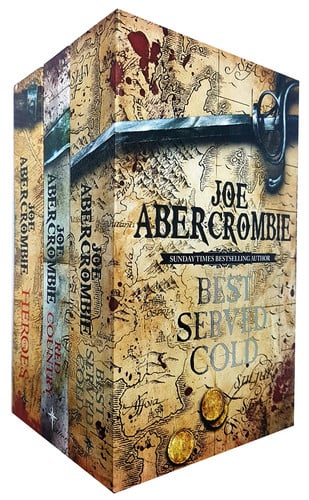
The natural starting point is Joe Abercrombie, who more than anyone shaped what modern readers mean by the term. In The Blade Itself you meet Inquisitor Glokta, once a dashing fencing champion, now a crippled and bitter torturer who conducts his grim work with a wit so sharp it almost distracts you from the horror of it. Abercrombie refuses to let anyone off easily, and that unflinching honesty carries into Best Served Cold, a revenge story set in war-torn Styria where nineteen years of bloodshed have bled the land white. Betrayal breeds betrayal, and you will find yourself rooting for people you probably should not.
From Abercrombie the territory widens. Mark Lawrence pushes further into the dark with Prince of Thorns, whose narrator Jorg Ancrath watched his mother and brother murdered at nine, led a band of killers at thirteen, and intends to be king by fifteen. He is one of the most uncomfortable protagonists in the genre, and that is precisely the point. Richard K. Morgan brings a different kind of edge in The Steel Remains, following Ringil, a war hero living forgotten and obsolete in a backcountry village until a search for a lost cousin drags him back into a brutal world. Morgan writes queer heroes into a genre that long ignored them, and he does it with teeth.
The collection then explores how grimdark bends when other traditions meet it. Miles Cameron's The Red Knight blends mercenaries, magic, and depravity into an epic where a company of hardened soldiers stands between civilisation and the Wild, and where twenty eight florins a month never feels like enough to face what waits out there. Anthony Ryan's Blood Song takes a more classic shape, following Vaelin Al Sorna through a harsh religious order, but the discipline and loss at its heart keep it firmly in serious territory rather than comfortable escapism. Cameron Johnston's God of Broken Things, sequel to The Traitor God, gives you Edrin Walker, an outcast tyrant magus who must risk his body and mind against horrifying demons, a reminder that grimdark can be propulsive and nasty and genuinely fun all at once.
The book that may stay with you longest is R.F. Kuang's The Poppy War, which drags the genre somewhere more harrowing still. Rooted in twentieth century Chinese history, it follows a war orphan whose rise through a military academy leads her toward atrocities that fantasy rarely dares to depict. Kuang takes the grimdark promise of consequences and makes it unbearably real, proving the subgenre can carry serious moral and historical weight rather than merely shock.
What connects all eight of these books is a refusal to pretend that power comes cheaply or that good intentions guarantee good outcomes. Whether you begin with Glokta's acid narration, Jorg's chilling ambition, Ringil's weary defiance, or Rin's terrible transformation, you are entering fiction that respects you enough to withhold easy comfort. Read them in any order you like, though starting with The Blade Itself gives you the foundation everything else builds upon. Pour yourself something strong, settle in, and prepare to care deeply about characters who absolutely do not deserve it. That tension is where grimdark lives, and this collection is the perfect place to find it.