Award-Winning Australian Fiction Worth the Hype
Literary prizes get complicated — the discourse around them often overshadows the books themselves — but some awarded Australian fiction genuinely earns its recognition and deserves to find new readers. This collection cuts through the noise to spotlight Miles Franklin winners, Stella Prize recipients, and other honoured Australian titles that reward the investment and justify the praise they've received.
Recommendation signals: User submission
Why these books work together
# Award-Winning Australian Fiction Worth the Hype
Let's be honest about literary prizes for a moment. The conversation around them can get exhausting — the shortlist controversies, the snubs, the sense that certain books get anointed for reasons that have little to do with whether you'll actually enjoy reading them. It's enough to make you suspicious of anything with a shiny medallion on the cover. But here's the thing worth remembering: sometimes the acclaim is entirely deserved. Sometimes a book wins because it genuinely does something extraordinary, something that stays with you long after the awards season chatter fades. This collection is my attempt to cut through the noise and hand you eight Australian novels that earn every bit of praise they've received. No hype, just books that reward the time you give them.
Start with Tim Winton, who appears here twice for good reason. Cloudstreet remains one of the great Australian novels, a sprawling, big-hearted saga of two working-class families sharing a rambling Perth house in the postwar years, full of ghosts, grief, and hard-won grace. It's the book that gets inside the skin of ordinary Australians like almost nothing else. Then there's The Shepherd's Hut, a leaner, meaner beast entirely — a taut, thriller-paced coming-of-age story that critics have compared to Cormac McCarthy, following a brutalised boy fleeing across the unforgiving landscape. Together they show you Winton's remarkable range, from tender family epic to spare, propulsive survival tale.
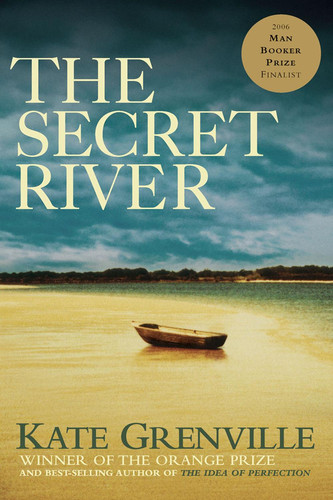
The land itself becomes a character in so much Australian fiction, and few books render it as unforgettably as Alexis Wright's Carpentaria. Set in the precariously settled coastal town of Desperance, this is a magnificent, mythic novel of the Phantom family and their battles with rival mobs and white officials — a book that reshapes how you think storytelling can work. It pairs powerfully with Kate Grenville's The Secret River, which travels back to 1806 and the illiterate bargeman William Thornhill, transported to New South Wales, where his hunger for land collides catastrophically with the people already living on it. Both novels reckon, in very different registers, with the deep and painful history written into Australian soil.
For sheer emotional heft, turn to Richard Flanagan's The Narrow Road to the Deep North, the Booker winner that traces one man's life from the horrors of a World War II prisoner-of-war camp on the Burma Death Railway to the complicated years afterward. It's a novel about love and survival and memory, and it will wreck you in the best possible way. Then consider Christina Stead's The Man Who Loved Children, an older classic that deserves rediscovery — an unflinching portrait of the Pollit family, a magnificently dysfunctional household ruled by the monstrous, charming Sam, set against Depression-era America. Few books capture the claustrophobia and cruelty of family life so precisely.
Two more recent triumphs round out the collection, both by writers who prove Australian fiction is fearless. Hannah Kent's Burial Rites transports you to nineteenth-century Iceland and the true story of Agnes, condemned to death for murder and sent to live out her final months on a remote farm — a novel of stark beauty and quiet devastation. And Charlotte Wood's The Natural Way of Things is the one that gets under your skin and stays there: a savage, dystopian fable about young women imprisoned in the desert, punished for the sexual scandals of powerful men. It has been called a Handmaid's Tale for the twenty-first century, and it earns the comparison.
What connects these eight books, beyond their trophies, is a willingness to look hard at difficult things — at colonisation and complicity, at family and violence, at what it costs to survive. They are not comfortable reads, exactly, but they are deeply rewarding ones. So the next time you find yourself eyeing an award sticker with skepticism, let this collection remind you that the recognition can be the real deal. Pick whichever calls to you first, whether it's the mythic sweep of Carpentaria or the intimate horror of The Natural Way of Things, and settle in. These are the books that justify the fuss.