Short Story Collections for Readers Who've Never Trusted the Form
Short fiction has an intimidating reputation among readers who prefer novels, but the right collection dismantles that resistance permanently. This selection targets the short story sceptic with collections that work like novels—building a world across stories, returning to characters, or following a single compelling obsession across multiple pieces.
Recommendation signals: User submission
Why these books work together
# Short Story Collections for Readers Who've Never Trusted the Form
Let's be honest about why you've avoided short stories. You've been burned before. You invest in a character, settle into a world, and then it's over—just as you were getting comfortable, you're turned out into the cold and asked to start again with strangers. It feels like being introduced to someone fascinating at a party only to have them vanish before you learn their name. Novels don't do that to you. They stay. They build. So you've made your peace with being a novel person, and you've let short fiction gather dust. But here's the quiet secret the form keeps from its sceptics: the best collections work exactly like novels, accumulating meaning and momentum across their pages. This selection is your bridge.
Consider starting where the resistance dissolves most gently. In Olive Kitteridge, Elizabeth Strout gives you a prickly retired schoolteacher in the coastal town of Crosby, Maine, a woman who notices the decline of her world far more readily than the shifts in those she loves. Each story circles back to Olive, sometimes centrally, sometimes glimpsed from the edges of someone else's life, until she becomes as fully dimensional as any protagonist you've followed for four hundred pages. When you finish, you'll want more, and Strout obliges with Olive, Again, which deepens the portrait rather than merely extending it, letting Olive age into new tenderness and new regret. Together they prove that a character can be built brick by brick across discrete stories without ever feeling fragmented.
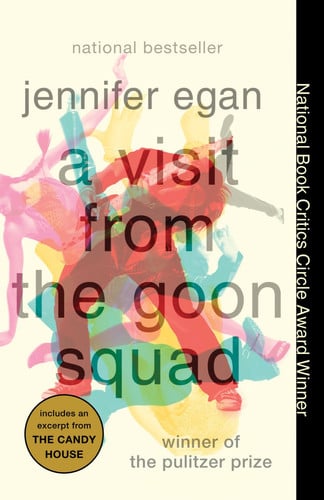
From there, the structural experiments grow bolder. Jennifer Egan's A Visit From the Goon Squad swirls through interconnected lives in the music industry, leaping across decades and perspectives, trusting you to assemble the constellation yourself. The payoff is a portrait of time's quiet brutality that no single narrative thread could deliver. Sherwood Anderson's Winesburg, Ohio is the grandfather of this whole approach, a series of vignettes exposing the loneliness and thwarted communication festering beneath small-town Midwestern life at the turn of the twentieth century. If you want to understand how linked stories came to be, this is the headwater. Ernest Hemingway's In Our Time carries that lineage forward, alternating spare stories with piercing vignettes, his famously precise language holding enormous emotional weight in very few words—proof that brevity is not the enemy of depth but its sharpest tool.
The collection also stretches toward the speculative and the genre-bending. Ray Bradbury's The Martian Chronicles follows humanity's colonisation of Mars across loosely linked tales, building a melancholy mythology about dreams, hubris, and the places we leave behind. It reads less like isolated science fiction and more like a single sustained meditation. And for the boldest leap of all, there's a book that blurs the boundary entirely. George Saunders's Lincoln in the Bardo fractures the night Willie Lincoln died into a chorus of ghostly voices, each fragment a tiny story contributing to a devastating whole. It is technically a novel, but its mosaic construction will train your eye to find the pleasure in assembled pieces, easing you toward the collections that work the same magic.
What unites every book here is accumulation. None asks you to abandon a world the moment you've entered it. Instead, each returns—to Olive, to Crosby, to Mars, to Winesburg, to a single grief-stricken night—rewarding your attention with the layered satisfaction you thought only novels could provide. The stories talk to one another. They build. They stay.
So consider this your invitation to reconsider a form you'd written off. Pick up Olive Kitteridge if you want warmth, Lincoln in the Bardo if you crave strangeness, Winesburg, Ohio if you love origins. Whichever you choose, you'll discover that the short story was never trying to abandon you. It was simply asking you to trust that the pieces add up to something whole—and these seven collections deliver that wholeness beautifully. Make yourself comfortable. This time, the characters stay.