Books for When You've Outgrown the Person You Were in That Relationship
The end of a long relationship doesn't just change your circumstances—it surfaces the uncomfortable question of who you became while you were in it and whether you like that person. This collection serves readers sitting with the strange grief of outgrowing a version of themselves rather than just a partner. Fiction and memoir that take seriously the work of becoming someone new after a defining relationship ends.
Recommendation signals: User submission
Why these books work together
# Books for When You've Outgrown the Person You Were in That Relationship
There is a particular kind of grief that nobody warns you about. It arrives not when the relationship ends, but a little later, when you catch your reflection and realise you don't entirely recognise the person who stared back from all those years. You spent so long becoming who someone needed you to be, or who the relationship quietly asked you to become, that reclaiming yourself feels less like a return and more like an introduction. Who were you before? And more unsettling still, do you even want that person back, or is the point to become someone entirely new? These books sit with you in exactly that strange, liminal space, offering no tidy answers but excellent company.
If you want the archetypal reinvention story, start with Elizabeth Gilbert's Eat, Pray, Love, which took the messy aftermath of a divorce and turned it into a pilgrimage across Italy, India, and Indonesia. It is a book about rebuilding an appetite for your own life. But reinvention isn't always a grand adventure, and Joan Didion's The Year of Magical Thinking reminds you that sometimes the self you're mourning is bound up with a person you can never get back. Written after the sudden death of her husband, it captures the irrational bargaining of grief with devastating precision, the way loss rewrites who you understand yourself to be.
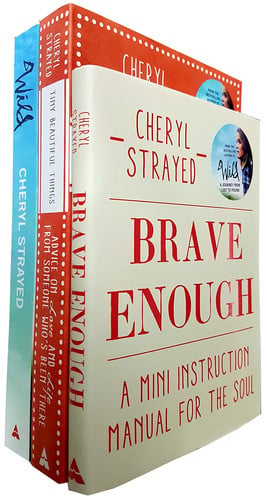
Cheryl Strayed understands this terrain intimately, and the three-book collection pairing Wild, Tiny Beautiful Things, and Brave Enough gives you her full range. Wild follows her thousand-mile hike along the Pacific Crest Trail after her marriage and her mother's death left her unmoored, while Tiny Beautiful Things collects the aching, generous advice she gave as Dear Sugar. Together they argue that you can walk yourself into becoming someone new, one deliberate step at a time.
Fiction holds this question just as tenderly. Sally Rooney appears twice here, and for good reason. In Normal People, Connell and Marianne spend years circling each other, each becoming a slightly different person in the other's orbit, and the novel asks whether you can ever cleanly separate who you are from who you were with someone. Conversations With Friends turns the same lens on Frances, whose affair with the older, married Nick forces her to confront how little she actually knows herself beneath her cool detachment. Rooney is brilliant on the way intimacy both shapes and obscures us.
For the darker nights, Sylvia Plath's The Bell Jar follows Esther Greenwood as she unravels during what should have been a glittering New York summer, suffocating under the expectations of who she was supposed to become. It is not a breakup book exactly, but it understands the terror of feeling trapped inside a self you no longer fit. And when you're ready to laugh again, Nick Hornby's High Fidelity offers Rob Fleming, who compulsively catalogues his top-five breakups while slowly, reluctantly realising that the common denominator in all his failed relationships might just be him. It is a funny, bruising book about finally growing up.
Finally, there is Nora Ephron's Heartburn, perhaps the most defiant book in the collection. Rachel Samstat, a cookbook author seven months pregnant, discovers her husband is having an affair, and rather than dissolving, she cooks, she jokes, she rebuilds. Ephron proves that outgrowing someone can be an act of wit and appetite rather than despair.
What ties all eight of these books together is a refusal to pretend that moving on is simple. They know that the hardest part isn't losing the other person, it's meeting the stranger you've become in their absence and deciding, with real tenderness, who you'd like to be instead. Whether you reach for Gilbert's open road, Didion's clear-eyed grief, or Ephron's defiant humour, you'll find writers who have stood exactly where you're standing. So make yourself a cup of tea, settle in, and let these stories remind you that outgrowing a version of yourself isn't a loss at all. It's the quiet, remarkable beginning of becoming someone you actually like.