Australian Fiction That Uses the Landscape as a Psychological Force
The Australian environment has always been more than backdrop in the country's best fiction—it operates as pressure, as threat, as mirror, as character. This collection gathers novels where the heat, the bush, the red dirt, or the coastal light does real narrative work on the people moving through it. Distinct from rural fiction or nature writing, this is about interiority shaped by place.
Recommendation signals: User submission
Why these books work together
# The Land That Looks Back
There is a particular kind of unease that settles over you when you read Australian fiction at its best. It is the sense that the country itself is watching, waiting, and quietly making its demands. Travel to almost any other literary tradition and the setting behaves itself: it holds the characters, frames their dramas, and stays politely in the background. Not here. In the finest Australian novels, the heat presses down like a hand, the bush swallows people whole, and the red dirt keeps its own counsel. The landscape is never merely scenery. It is a force that reshapes the people moving through it, exposing what they would rather hide and demanding a reckoning they did not expect. This collection gathers eight novels where place does genuine psychological work.
You could begin nowhere else but Picnic at Hanging Rock, Joan Lindsay's hypnotic 1900-set mystery in which three schoolgirls vanish into the geology of a volcanic outcrop on a cloudless summer day. The rock is not a location where something happens; it is the something, an ancient presence that absorbs the girls and leaves a community unravelling in its shadow. That same sense of the continent as an entity with its own will animates Patrick White's monumental Voss, where a German explorer sets out to cross the interior and finds that the desert within his own ego is as vast and unforgiving as the one before him. White returns to this terrain in The Tree of Man, following a bush farming couple through the slow seasons of a life at the turn of the century, where drought, flood, and fire are not plot devices but the very rhythm of existence, carving meaning and suffering in equal measure.
Tim Winton appears twice here, and for good reason, because no living writer renders the pull of Australian place more viscerally. In Dirt Music, Georgie Jutland is stranded in the coastal town of White Point, trapped in domestic tedium beside a fisherman she does not love, until a drifter and the wild country of the northwest crack her life open. The Riders works the idea in reverse, following Scully as he renovates an old farmhouse in Ireland while his sense of self, so tied to home, begins to disintegrate when his wife disappears. Winton understands that landscape shapes you even in its absence, that longing for a place can be its own kind of haunting.
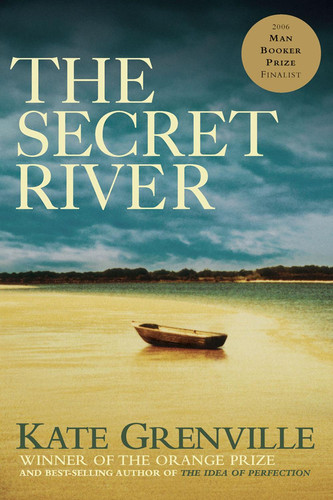
Then there is the darker, historical weight carried by The Secret River and The Broken Shore. Kate Grenville's novel follows William Thornhill, a Thames bargeman deported to the New South Wales colony in 1806, who tries to claim a patch of alien ground along the Hawkesbury and discovers that the land already belongs to others. The terrain becomes the stage for violence and complicity that no character can outrun. Peter Temple's The Broken Shore brings this unease into contemporary crime fiction, where a wounded detective returns to his coastal hometown and finds the brooding Victorian landscape inseparable from the buried tensions of race, class, and history.
The collection reaches its most expansive vision in Carpentaria, Alexis Wright's sprawling masterwork set in the precariously settled town of Desperance on the Gulf country. Here the land is not a force acting upon people but a living cosmology, and the battles of the Phantom family against rival mobs and white officials unfold within a landscape saturated with story, spirit, and time. Wright turns the whole premise inside out, reminding you that for the country's first peoples, the land was never backdrop to begin with.
What links these eight books is a refusal to treat the environment as inert. Whether it is White's deserts, Lindsay's rock, Winton's coastlines, Grenville's river, or Wright's Gulf, each writer understands that geography and interiority are inseparable here. Read them together and you will start to feel the pressure yourself, that peculiar Australian awareness that the ground beneath your feet has opinions. Pour a coffee, settle in, and let these novels do to you what the landscape does to their characters. You will not emerge quite the same.